
 See My Latest Article on HelloNation
A routine vehicle inspection is a structured check of a vehicle’s safety systems, emissions equipment, or both. In Connecticut, the exact process depends on the vehicle’s age, type, registration situation, and whether the inspection is required for emissions compliance, a VIN verification, or a state safety requirement.
For most privately owned passenger cars, Connecticut does not require a general annual safety inspection. However, many vehicles are subject to periodic emissions testing, and certain registration or ownership changes may require an inspection or vehicle identification number verification. A repair or maintenance inspection may also be performed at any time to identify developing problems before they become unsafe.
What is checked first?
The inspection usually begins with basic vehicle and paperwork information. The inspector may confirm the vehicle identification number, odometer reading, registration details, and the type of inspection required.
The vehicle’s year, make, model, fuel type, and intended use can affect the inspection process. A recently purchased vehicle, an out-of-state vehicle being registered in Connecticut, a rebuilt vehicle, a motorcycle, and a vehicle with a registration issue may not follow the same procedure as an ordinary passenger car.
Before testing begins, the vehicle may also be checked for obvious conditions that could interfere with safe testing, such as severe fluid leaks, damaged components, or equipment that is not properly secured.
Does a routine inspection include an emissions test?
For vehicles covered by Connecticut’s emissions program, the emissions portion evaluates whether the vehicle’s pollution-control systems are operating within required limits. The test is not simply a visual look at the exhaust pipe.
Depending on the vehicle, the process may include:
- Connecting diagnostic equipment to the vehicle’s onboard computer
- Checking whether required emissions monitors have completed
- Looking for active diagnostic trouble codes
- Evaluating emissions-related data stored by the vehicle
- Checking the fuel cap or related evaporative-emissions equipment
- Confirming that emissions-control components have not been improperly removed or altered
A dashboard warning light related to the engine or emissions system can lead to a failure. Clearing the light shortly before testing may not solve the problem because the vehicle’s readiness monitors may still show that the required system checks have not been completed.
A vehicle that recently lost power, had its battery disconnected, or received certain repairs may need normal driving time before all monitors are ready. Driving patterns vary by vehicle, so there is no single distance that guarantees readiness.
What happens during a safety inspection?
A safety inspection is more physical and visual than an emissions test. It focuses on parts that help the driver control the vehicle, see the road, stop safely, and remain protected in a collision.
Common inspection areas include:
- Braking components and brake operation
- Steering and suspension parts
- Tires, including tread condition and visible damage
- Wheels, wheel fasteners, and related hardware
- Seat belts and other restraint equipment
- Headlamps, brake lamps, turn signals, hazard lamps, and reflectors
- Windshield, other glass, and windshield wipers
- Mirrors and the horn
- The frame, chassis, and visible structural components
- Emissions-control devices, where applicable
The inspector may operate lights, activate the horn, examine the tires, look underneath the vehicle, and use equipment to evaluate braking or other systems. Some areas are checked for presence and condition rather than measured with a detailed component-by-component diagnosis.
Passing an inspection does not mean every part of the vehicle is new or that future maintenance will not be needed. It means the vehicle met the requirements covered by that particular inspection at that time.
What can cause a vehicle to fail?
A failure can result from a safety defect, an emissions problem, or an administrative issue connected with the inspection. Common examples include:
- A tire with unsafe wear, exposed cord, or significant damage
- Brake problems that affect stopping performance
- Loose steering or suspension components
- A nonworking required lamp
- A damaged windshield in a regulated viewing area
- Missing or defective seat belts
- An illuminated emissions warning light
- An emissions system that has not completed its required monitors
- Excessive emissions or a failed evaporative-emissions check
- Altered or missing emissions-control equipment
- A VIN or registration issue requiring additional verification

Connecticut winters can make several of these concerns more noticeable. Road salt and moisture may contribute to corrosion around brake lines, exhaust components, fasteners, and structural areas. Potholes and rough pavement can also affect tires, wheels, steering, and suspension parts.
What does a failed inspection mean?
A failed inspection identifies a condition that must be corrected before the vehicle can meet the applicable requirement. It does not necessarily mean the vehicle is unsafe in every respect, but a failure involving brakes, steering, tires, lights, or structural damage should be treated seriously.
The inspection paperwork should identify the reason for failure. That information is more useful than replacing parts based only on a dashboard message or a general assumption about the vehicle’s age.
For emissions failures, Connecticut allows a vehicle to be repaired and returned for a reinspection under state program rules. The timing and eligibility requirements can depend on the type of inspection and the station that performed it. The written inspection result should be kept until the matter is resolved.
A vehicle that fails because of a safety concern may require confirmation that repairs have been completed and that the vehicle is safe to operate.
What should drivers do before an inspection?
A few simple checks can prevent avoidable problems:
- Confirm that all exterior lights work, including the license-plate lamp.
- Check tire pressure when the tires are cold.
- Look for severely worn tread, bulges, cuts, or uneven wear.
- Make sure the horn and windshield washers operate.
- Replace badly worn wiper blades.
- Check that seat belts latch and retract properly.
- Make sure the fuel cap is present and tight.
- Avoid disconnecting the battery or clearing an emissions warning shortly before testing.
- Remove objects that block the VIN area or interfere with access to the vehicle.
These checks do not replace an inspection, but they can reveal obvious issues before the vehicle is presented.
Is a routine maintenance inspection the same as a state inspection?
No. A state-required inspection is limited to defined legal and technical requirements. A routine maintenance inspection is broader and may examine fluid levels, battery condition, belts, hoses, filters, leaks, cooling-system components, underbody corrosion, and signs of upcoming wear.
For example, a vehicle may pass an emissions test while still needing a battery, brake service, tire replacement, or suspension repair. The opposite can also occur: a vehicle may drive normally but fail an emissions test because of a stored fault or incomplete monitor.
Understanding the difference helps vehicle owners interpret the result accurately. A pass is not a complete mechanical health report, and a failure should be addressed according to the specific item identified.
How often should a vehicle be inspected?
The required schedule depends on Connecticut rules and the vehicle’s circumstances. The state generally notifies owners when an emissions inspection is due. Registration transactions, ownership changes, vehicle age, out-of-state history, and vehicle classification can create different inspection requirements.
Regardless of the legal schedule, a practical maintenance inspection is useful before long trips, after a collision or pothole impact, before winter, and when warning signs appear. Unusual braking, steering pull, vibration, fluid loss, repeated warning lights, or tire damage should not be postponed until the next scheduled test.
IMAGE_ALT:
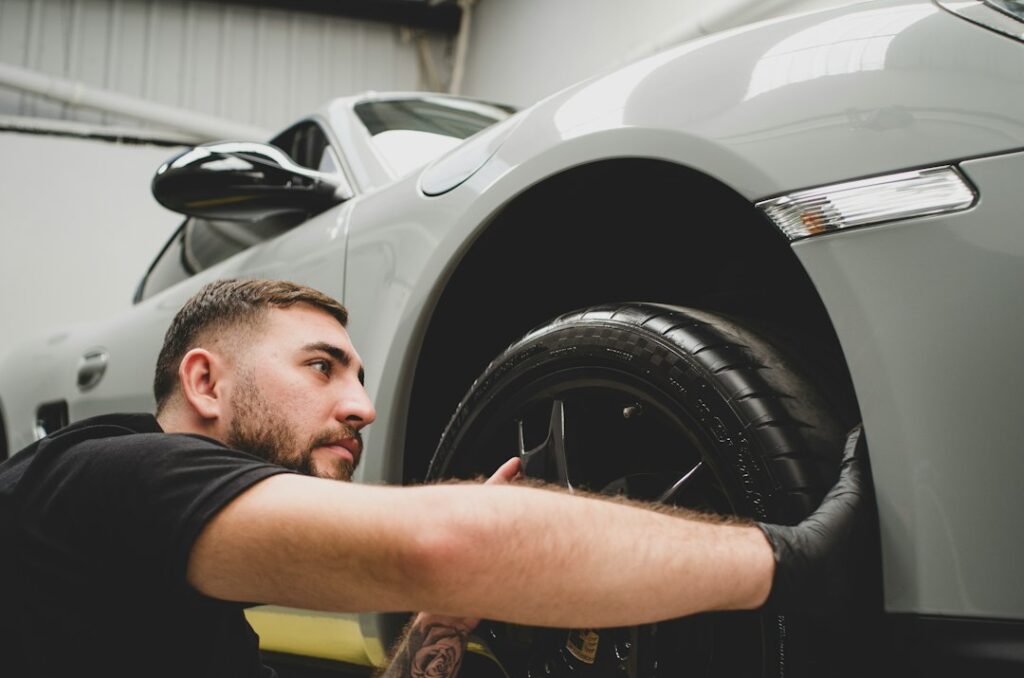
Technician examining a vehicle’s tires, brake components, lights, and emissions diagnostic connection during an inspection.